
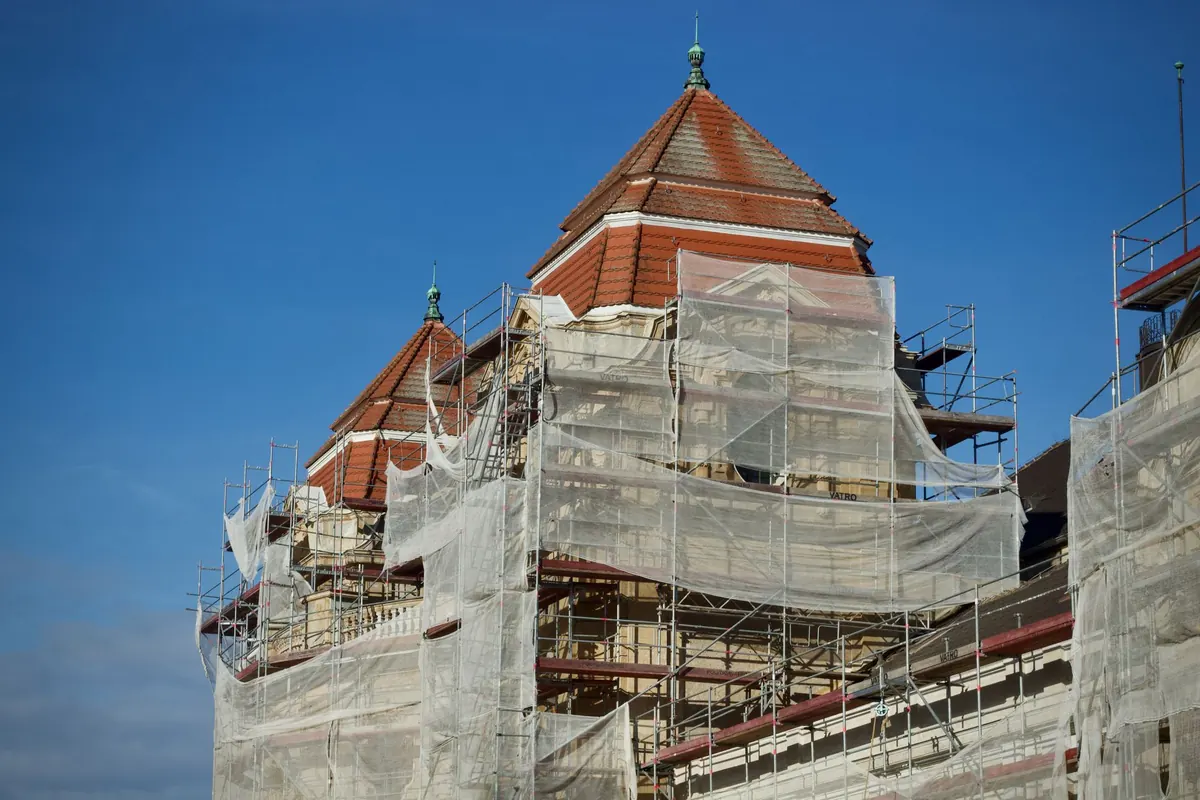




You have booked the train, checked the opening times and worked out which bus gets you from the station to the gate. One thing left: knowing what you are about to walk into. An abbey is rarely one building from one century. It is a stack of decisions — a founder's grant, a reform, a surrender, a Victorian rebuild, a new roof — and the order of those decisions changes what you notice in the stone.
What follows is the checklist worth working through before a first serious visit, whether the site is a honey-coloured ruin in a Yorkshire valley, a parish church that still holds Sunday services, or a working monastery with a shop by the gate.
First, Establish What Actually Survives
Most visitors assume the ruins are the abbey. Usually they are a fraction of it. At Fountains, the broken church and claustral range are only the core of a precinct that once included gatehouses, mills, brewhouses, an infirmary, guest lodgings and outlying granges. Tintern's shell sits in a landscape of fishponds and water channels that most people walk straight past.
So the first question is not "when was it built" but "what am I looking at now". Ask:
- Is the site a ruin, a parish church, a cathedral, a private house, a school, a museum, or a living monastic community?
- Who owns it, and how much of the medieval layout is accessible?
- Is anything on the site off-limits, and does it need permission or a booked tour?
Some abbeys were never dissolved into ruins. Tewkesbury and Malmesbury continue as parish churches; Westminster still functions as a church. Others became country houses — Lacock in Wiltshire, Newstead in Nottinghamshire — and their cloisters survive as corridors and drawing rooms. Buckfast in Devon was refounded by monks in the 1880s, and Mount St Bernard in Leicestershire has been a working Cistercian house since the nineteenth century. Knowing which category you are visiting saves a lot of confusion on the day.
The Four Dates That Shape Every Abbey Story
1. Foundation
Find the founder, the order and the date. The order matters more than most visitors expect. Cistercian and other reformed communities tended to choose remote valleys with reliable water; Benedictine houses often sat close to towns and markets; Augustinian canons frequently ran hospitals, schools and parish churches. The founder's motive — penance, dynastic ambition, a family burial place — usually explains the site's later wealth and its later troubles.
2. The Middle Centuries
Fires, debt, bad abbots, reform and rebuilding all leave marks. The church you see may be the third on that spot. Look for the documentary version of the same story: building accounts, visitation records, episcopal registers, and complaints about discipline that often preserve more detail than the flattering chronicles.
3. Suppression
England and Wales: 1536 to 1540. Ireland: from the late 1530s, with a second wave in the seventeenth century. Scotland: after the Reformation of 1560. Useful search terms are surrender deed, pension list, Valor Ecclesiasticus, Ministers' Accounts and dissolution. The pension lists are gold: they name the last abbot, the prior and the monks, and often record what each was paid afterwards.
4. Afterlife
Quarry, mansion, farm, romantic ruin, Victorian restoration, new community. This is the phase that most shapes what a visitor sees today, and it is the one most often skipped in guidebooks.
Sources Worth Your Time
- County histories. The Victoria County History covers most English counties and gives each religious house a numbered entry with foundation, endowments, dissolution and references. Many volumes are free to read online.
- Dugdale's Monasticon Anglicanum. A seventeenth-century compendium, still useful for charters it printed in full. Follow the documents, not the narrative.
- The National Archives' Discovery catalogue. Search by the house's name. Monastic records ended up scattered — Exchequer, Chancery, the diocese, a county record office, sometimes a university library.
- Printed cartularies and charter editions. County record societies and national record series published many of them; out-of-print volumes often turn up on Internet Archive and Google Books.
- Architectural guides. Pevsner's Buildings of England and its Scottish, Welsh and Irish companions give you the building phases in a few tight paragraphs.
- Regional databases. Monastic Wales and Monastic Ireland for those countries, Canmore for Scotland, Coflein for Wales, and the National Monuments Service survey for Irish sites.
Going Online Without Getting Lost
An encyclopedia entry is a reasonable place to find a name, a date range and a reading list. Treat the footnotes as the source, not the page. The same goes for parish and tourism websites. Search with document words rather than questions: "cartulary of", "surrender of the abbey", "abbey pension", "inquisition post mortem". Victorian county histories are widely digitised and genuinely useful, though their interpretations are dated.
Read the Landscape, Not Just the Text
Tithe maps and apportionments from the 1840s, first-edition Ordnance Survey sheets, estate maps and enclosure awards show you boundaries, tracks and watercourses that predate the ruins you are visiting. Georeferenced map viewers let you lay a nineteenth-century sheet over a modern one and watch the precinct appear. LiDAR coverage, freely available in many areas, reveals earthworks under trees and pasture. Field names are clues too: Abbey Field, Monk's Pond, Grange Lane, Conduit Close.
If you only do one thing before a visit, do this. Twenty minutes with an old map will tell you more about how the abbey worked — where the water came from, how the precinct was entered, which fields fed it — than an hour of reading dates.
Practical Prep for Archives and Sites
Work out where the records actually are before you plan a trip. Monastic archives are held by county and borough record offices, diocesan record offices, cathedral libraries, universities and occasionally private estates. Most archives ask you to order documents in advance and many issue a reader's ticket, so check the rules a week ahead rather than the morning of.
Once you are in the reading room: pencil only, bags in a locker, no flash on photographs, and always ask before copying. Record the full reference number for anything you photograph, not just "the abbey documents" — you will want it later. Archivists are usually delighted to help if you can say precisely what you are after: "I am looking for the 1539 pension list for this house" gets a much better response than "anything you have on the abbey".
If you are visiting a working monastery rather than a ruin, check whether the community welcomes visitors, and where they ask you not to go. Silence in a cloister is not atmosphere; it is somebody's home.
Your Pre-Visit Checklist
- Confirm what survives: ruin, church, house, school or living community.
- Note the four dates: foundation, major rebuild, suppression, afterlife.
- Read one solid secondary account — a Victoria County History entry or an architectural guide.
- Find two primary sources by name: a charter or cartulary, and a suppression document.
- Locate the archive that holds the records, and check access rules.
- Pull up an old map and a modern one side by side.
- Write down five questions you want answered on site.
Arrive with those in your pocket and the ruins stop being scenery. You will find yourself looking for the water channel, the blocked doorway, the reused stone in a farm wall — and you will know why they are there.
Photo: hello aesthe / Pexels
Related posts
More stories you’ll love reading